Last year's D'var Torah on Vezos Haberachah, Succos, and Beraishis
NEW THIS YEAR! Also, check out and follow our new Thoughts on Parsha Google+ Page where archives will be posted each week
Wednesday, September 25, 2013

Friday, September 13, 2013
Yom Kippur And Vezos Haberachah - Callous Confessions
Yom
Kippur
And
Vezos
Haberachah
Note:
Vezos
Haberachah
is not read this Shabbos

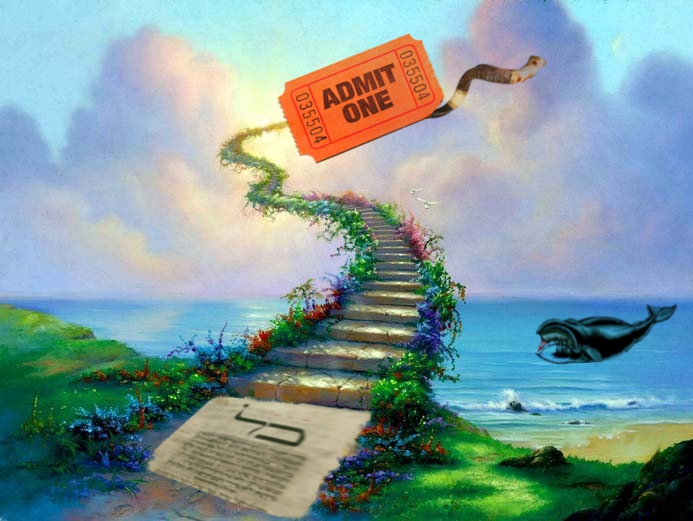
Callous
Confessions
By:
Daniel Listhaus
יְחִי
רְאוּבֵן וְאַל יָמֹת וִיהִי מְתָיו
מִסְפָּר:
וְזֹאת
לִיהוּדָה וַיֹּאמַר שְׁמַע ה'
קוֹל
יְהוּדָה וְאֶל עַמּוֹ תְּבִיאֶנּוּ
יָדָיו רָב לוֹ וְעֵזֶר מִצָּרָיו תִּהְיֶה
“May
Reuvein live and not die, and may his men be in the count. And this
to Yehuda, and he said: Listen Hashem, to the voice of Yehuda, and to
his people shall You bring him; may his hands fight for him and may
You be a Helper against his enemies.”
-Vezos
Haberachah 33:6-7
The
mishna1
describes the process that the Beis
Din HaGadol (The
Supreme Court) would go through with a woman who is a sotah.
Before having her drink the mei
hamarim (literally-
bitter waters), the beis
din would
try to convince the suspected sotah
to
just admit that she indeed was with the man that her husband warned
her not to be with. After all, the mei
hamarim itself
as well as its potential effect was no laughing matter. The vital
ingredient of the mei
hamarim was
that they would dissolve the parsha
of
sotah
into
it – which contains Hashem's name. A sotah
who
would not admit would have to drink this water as a test. If indeed
she had done what we suspect her of doing, her insides would blow up
and she would die.
The
gemara2
elaborates
that one of the steps of the persuasion process was that beis
din would
tell her stories of people in Chumash
who
did improper things (similar to the sotah)
but were not embarrassed to admit to them. So too, they try to tell
her, she should learn from them and not let her embarrassment
overpower her to stop her from admitting what she did. The two
examples of stories that the gemara
says
that beis
din would
use to illustrate their point are the ones which involves Reuvein and
Yehuda. Reuvein switched the beds in Yaakov's tent after Rachel died,
deciding to take action when he saw that Yaakov had chosen Bilhah
(Rachel's maidservant) to take her place instead of Leah. Beis
din would
relate this story to the sotah
and
then say that Reuvein stood up to his actions, did teshuva
(repentance),
and
admitted to his father that it as he that switched the beds. Beis
din
would then mention the episode of Yehuda and Tamar. Yehuda was
mezaneh
(had
marital relations) with Tamar without knowing who she was. When
Yehuda was later informed that Tamar had zenus
with someone, his reaction was that she should be put to death,
However, when he realized that she had the items that Yehuda had used
to pay for her services, he admitted “tzadkah
me'meh'nee”
- declaring that Tamar was righteous. Beis
din would
then again suggest to the sotah
that
she too should admit to her actions like Yehudah did.
The
gemara
continues
to mention that we see from the juxtaposition of passukim
(verses)
in this week's parsha
that
it was Yehudah who actually caused Reuvein to admit what he did.
Rashi3
elaborates that Moshe was davening that the shevet
(tribe)
of Reuvein should live in this world and “not die” in the next
world – meaning that the incident of him switching the beds in
Yaakov's tent should not be remembered to his detriment, because, as
we see from the juxtaposition of the aforementioned passukim,
when Reuvein saw that Yehuda stood up and admitted, he took the
opportunity to do so as well.4
The
important thing to keep in mind though is that admitting one's sins
to people is not something that is so obvious that could be done.
Unlike other religions, confessions to a Rabbi is not a part of our
teshuva
process. We must confess personally to Hashem. As a matter of fact it
is not simple at all for someone to admit to his own sins in public.
After all, one is not allowed to say lashon
harah even
about
oneself unless it is serving a constructive purpose which falls
within the guidelines of hilchos
lashon harah
or if he is speaking to someone he trusts who could help him conquer
his nisyonos
(moral
tests). Furthermore, as the gemara
itself
points
out, we are not permitted to go around announcing our aveiros
– doing so would demonstrate that we do not take our aveiros
seriously.
The gemara
therefore
asks that granted Yehuda was allowed to admit what he did because in
the absence of doing so, Tamar would have been killed. However, how
was Reuvein able to admit? What he had done was long over with no
such severe ramifications, so what purpose did Reuvein's admitting
serve? The gemara
answers
that Reuvein admitted in order that Yaakov should not suspect his
other brothers. In other words, until Reuvein publicly admitted there
was a little thing that bothered Yaakov every time he spoke to one of
his sons because in the back of his mind he would wonder if perhaps
this was the son who had switched the beds. Therefore after Yehuda
stood up to admit, Reuvein followed suit.
We
could see from this whole gemara
a fantastic concept. Here we have a sotah
who
will face a most unpleasant death by not admitting what she did, as
well as be responsible for having the Name of Hashem be erased. The
beis
din,
tries to convince her to admit and does so by bringing stories of
people who admitted even in order to save someone else's life and
even to save others from merely being suspect in their father's eyes.
Indeed admitting publicly is an incredibly scary thing. Yet, during
the y'mei
slichos,
aseres
y'mei teshuva and
especially on Yom
Kippur itself,
we find ourselves admitting to whole lists of things that we have
done. How could it be that a sotah,
who is already in all the headlines as a suspect having been warned
by her husband and witnessed by eidim
(witnesses),
and who is now facing death, needs to be persuaded to admit in order
not to have a Name of Hashem be erased but yet we are able to show up
comfortably in Shul
alongside our friends and spend all day asking forgiveness for
aveiros
we
have done? The gemara
had
said that one who is able to just admit his sins is someone shameless
and a mechatzef.
So how could we come before Hashem in public and admit to the things
we have done?
There
is no question that indeed this is the method that must be used, we
have so little of our own zechusim
and depend so heavily on Avraham, Yitzchak, and Yaakov and the 13
Middos
of
Rachamim
(attributes
of mercy), which Hashem promises He will never return empty5,
as well as the power of coming as a tzibbur
(community)
to
ask Hashem to help us do teshuva.
However, the big question is on us who when we admit to the things we
have done, it is with such callousness. Such an absence of feeling
while admitting to such horrible things could only be because of one
of three reasons: One reason could be that we look around us and see
that everyone is saying the same words. Yom
Kippur is
part of our yearly calendar. It is not like we were caught “red
handed”, rather we are doing this on our own, just part of the
routine of being a Jew. Therefore, perhaps it does not seem as
personal to us. A second possible explanation is that we do not feel
that the things we are saying are relevant to us. After all, some of
the things we admit to seem a bit extreme and we may think to
ourselves, “well, I may have done 'x', and given the opportunity I
would probably be willing to do 'y', but 'z' I would never go so far
to do.” The distance we may feel to the aveiros
we
are admitting to may make us feel more relaxed and think that the
tefillos
and
viduy
are
not so relevant to us. A third possible explanation is that perhaps
we have given up. We stand in Shul
and do a drum-roll on our chest by “ashamnu”
and the “al-cheit's”
as we think to ourselves – I am who I am and there is no way for me
to change now.
However,
these three fatal diseases – for that is precisely what they are –
as causes for our callous teshuva,
could not be further from the truth. First, the Chovos
Halevavos6
writes that beyond what we could term as “chovas
ha'eivarim”
- the responsibilities we have in using our bodies to do mitzvos,
there is another area of avodas
Hashem which
is chovas
ha'leiv –
what we are expected to feel inside us constantly. The Chovos
Halevavos offers
the following parable: The personal servant of a king is expected to
take care of every single need in the kings house at all times. It
happens to be that sometimes he is required to take care of the
gardening, mowing the lawn, raking leaves, etc. but those are not
chores which are constantly present, but rather tasks which are
seasonal. So too we have mitzvos
we
do once a year, we have mitzvos
we
do once a month, we have mitzvos
we
do once a week, we have mitzvos
we
do once a day, and we have mitzvos
we
do multiple times a day. However, there is also a category of mitzvos
in
the heart which must be active every second. This is the realization
that Hashem exists and is the Ruler of the world, and that he knows
our thoughts. So as much as we could convince ourselves that we were
not caught “red-handed” and that we are just joining together in
Shul
for our yearly ritual, we are dead wrong. Hashem knows what we did
and what our intentions were. Therefore when we admit to having done
aveiros,
it
should feel real to us and we should try to get at least a small
feeling that we were really caught red-handed, but are now given the
chance to repent.
Second,
although it may be true that some of the parts of viduy
sound
extreme, it was intentionally designed this way to include any
aveirah
we
may have done. Every aveirah
fits
into one of the categories in the al
cheit's. Additionally,
the Orchos
Tzadikkim7
writes
that when we say “ashamnu...”
and
go through the aleph-beis,
we have the ability to personalize the viduy
and
insert our own aveiros
according
to the aleph-beis,
that we are aware of and want to do specific teshuva
for.
In
response to the third cause of callous confession, there is no such
thing as giving up. As a Jew there is no option to stay at a stagnant
level. A person who stops growing hurts himself exponentially because
not only does he stop growing, but he starts falling. So the one who
convinces himself that he cannot change is lying because either way
he is changing – just for the worse and not for the better. What he
really means to say is that he is not capable of improving as a
person according to the Torah. However, such a despair is completely
false. In
Netzavim the
Torah8
states, “ For this commandment that I command you today, it is not
hidden from you and is not distant. It is not in the heavens...nor is
it across the sea....Rather, the matter is very near to you, in your
mouth and in your heart, to perform it.” The Ramban9
learns
that these passukim
refer
to the mitzva
of
teshuva.
It is very near to us. We just have to make sure that we are doing it
with more than our mouth alone, but rather as the passuk
describes,
“with your mouth and with your heart”.
Hashem
has given us the opportunity to join together as a tzibbur
and
do teshuva.
Let us utilize the opportunity to also make it more personal, even if
it means taking just one thing that we have done and think about it,
regret it, admit to it, and to wok hard on not doing it again.
Perhaps in this way we will have a productive and real Yom Kippur.
May
Hashem help us not fall into the traps of thinking that it is part of
the routine, that it is not relevant, or that it is too late. With
this new focus may k'lal
yisroel be
zocheh
to
do teshuva
sh'leimah this
Yom
Kippur
and
may
Hashem respond by bringing Mashiach
as we blow the shofar
after Ne'ilah.
1Sotah
1:4, Gemara Sotah 7a
2Sotah
7b
3Devarim
33:6 and 33:7 as well as in the
Gemara Sotah 7b
4See
Chizkuni - Devarim33:6
5Gemara
Rosh Hashanah 17b
6In
the introduction
7Orchos
Tzadikkim:Sha'ar HaTeshuva
8Devarim
30:11-14
9Ibid.
Friday, August 30, 2013
Parshas Nitzavim-Vayeilech and Rosh Hashanah - Ignorance is Not Bliss
Parshas
Nitzavim-Vayeilech
and
Rosh
Hashanah

Ignorance
is Not Bliss
By:
Daniel Listhaus
וְהָיָה
בְּשָׁמְעוֹ אֶת דִּבְרֵי הָאָלָה הַזֹּאת
וְהִתְבָּרֵךְ בִּלְבָבוֹ לֵאמֹר שָׁלוֹם
יִהְיֶה לִּי כִּי בִּשְׁרִרוּת לִבִּי
אֵלֵךְ לְמַעַן סְפוֹת הָרָוָה אֶת
הַצְּמֵאָה
“And
it will be that when he hears the words of this oath, he will bless
himself in his heart, saying, 'I will have peace, though I go as my
heart sees fit' – thereby adding the drunk with the thirsty.”
-Nitzavim
29:18
The
Torah tells us that despite us being at Har
Sinai
to accept the Torah, and despite us accepting upon ourselves the
covenant with Hashem along with the berachos
(blessings)
and
k'lalos
(curses)
on Har
Grizim and
Har
Eivel,
still there perhaps will be someone who thinks to himself that it is
all one big bluff. The S'forno1
elaborates that while receiving the Torah and accepting the berachos
and
k'lalos,
this person was being a bobble head, just nodding in agreement with a
smile to everything that was being said, while in his heart he was
thinking, “There is nothing to worry about. These things cannot
really happen to ME.”
In
economics, there is a simple relationship between quantity and price.
The greater the supply of something, the cheaper it becomes. The same
negative correlation often exists between kamus (quantity)
and eichus (quality).
The more accessible something is, the less unique it becomes, and
consequently, it loses the attention it would have received had it
not been so accessible. Without a doubt this balance is one which
many are presented with on a daily basis. Halachik challenges
which we, as a nation, have struggled with for centuries have
suddenly become extremely easy in our times to the point that they
rarely test our steadfastness to the Torah. For example, carrying on
Shabbos is something that hardly crosses anyone's mind because
so many cities have an eiruv.
As a matter of fact, keeping Shabbos
in general is not as hard of a challenge anymore being that many
offices are anyway closed on Saturdays. Additionally, with crock
pots, warming trays, air conditioners, lights, and timers, Shabbos
is no longer misconstrued as our weekly Amish day. Keeping kosher
is also something which has
become so easy because not only is there a vast variety of kosher
foods accessible across the
world in supermarkets, there are even imitations of non-kosher
foods which we have available.
However,
as great as this is and the tremendous ease that it allows us to
achieve mitzvos, it is
also easier for someone to live in this system absentmindedly and
ultimately hurt oneself. A person could be so used to just going with
the flow and keeping to the general routine that he becomes ignorant
to the rules and concepts themselves. Then, when a question comes up,
this person will not even know to ask but instead make decisions by
himself based on rationalizations and false logic.
During
this time of year, as the month of Elul comes to an end and Rosh
Hashanah is literally around the
corner, it is definitely a season which, despite not fazing us in any
means that it should or that it used to, so many Jews, from those
spending the day in shul
to those who are most distant from keeping the mitzvos,
stop to think. On a most basic level, we think about the fact that
Rosh Hashanah
is more than just a “New Year's party”, but rather a judgment day
for all of mankind. At the same time, although we may mouth those
words, discuss the concept with a friend, or merely think about it
for a second, it is often followed by a very dangerous thought:
“Granted, today is Rosh Hashanah
and that Hashem is king of the world, but I have nothing to worry
about. As soon as Yom Tov
is over I will continue living my normal life and go back and catch
up on work.” Similar to the person the Torah speaks of in this
week's parsha, such a
person lives his life going with the flow, pretending to respect the
things that he thinks others view as important. However, as the
S'forno comments, this
person is a bobble head. He is saying and doing one thing, but in his
head he is thinking to himself that there is nothing to worry about
and that there is no reason to change what he has been doing his
whole life.
Our
task, though, is to set our minds on a very different track. The
Gemara2
relates that Rebbe
Eliezer used to say that one should do teshuva (repent)
one day before he dies. His talmidim (students)
asked him, “How is that possible, a person does not know when he is
going to die?” Rebbe
Eliezer responded, “Precisely, therefore one should do teshuva
every single day!” Similarly
we find in Pirkei Avos3:
“They used to teach three things. Rebbe
Eliezer says...repent one day before your death.”
When
it comes to the Nobel Peace Prize, there is always a group of people
or countries who raise an eyebrow at the yearly recipient. However,
the weirdest fact about the Nobel Peace Prize is how it started.
Alfred Nobel was a know genius chemist. He owned factories with very
dangerous chemicals and explosives. Therefore, it was never a
surprise to read in the headline's of the Stockholm, Sweden newspaper
in the 1860's that another one of Nobel's factories containing
nitroglycerin or explosives of some sort, exploded killing the
employees inside. Despite this, Nobel continued to build more
factories inventing modern dynamite as well as many other dangerous
tools.
In
1888, Alfred's brother, Ludvig, died. When he died, a French
newspaper, thinking that it was Alfred who had died, published an
obituary stating, “Le merchand de la mort est mort”
- which means “The merchant of death is dead”. The newspaper
supposedly continued to read, “Dr. Alfred Nobel, who became rich by
finding ways to kill more people faster than ever before, died
yesterday.” One could only imagine the look on Alfred Nobel's face
when he read his own obituary, which portrayed him in such a negative
light. This unexpected shock caused him to rethink his goals in life
and to contemplate how he would go down in history. So, he decided to
start the Nobel Peace Prize so that his name be forever associated
with recognizing those who strive to bring peace to the world, as
opposed to being remembered as the merchant of death.
It
is not often that someone is given the opportunity to read his own
obituary to know what people really think about him and what he could
do to change the way he is perceived. Furthermore, being that our
birth certificates do not come with expiration dates, there is no way
of knowing when Hashem will decide that our time here is up and that
a snapshot of our life must be taken for final judgment. However, we
do have the opportunity to learn what is expected of us and
contemplate the fact that it is real and that there will be a real
judgment, which will take all of our actions into consideration.
The
Orchos Tzadikkim4
writes that there are seven things that a person must understand
before beginning to do teshuvah.
The first step he writes is the following. The type of people who we
refer to as “ba'alei
teshuva” is often
limited to those who have come from transgressing on the most serious
aveiros (sins) but
have now chosen the correct path. However, the truth is that the
definition is a lot broader than that. Even transgressing on the
smallest aveirah, or
at least what we consider a “light” aveirah,
is still a slap in the face of the King who declared the rule. It is
therefore our job to take note on the many things we have done wrong
and respond by becoming a “ba'al teshuvah”.
The Orchos Tzadikkim continues
to write that there is so much we do wrong we may not even be aware
of. After all, it makes sense that someone who does not take the time
to understand the mitzvos
is bound to make mistakes. Therefore, it is each person's duty to
study the halachos and
ask questions so that he should not be ignorant, correct his
mistakes, and know what he did wrong in order to do a proper teshuva.
Rosh
Hashanah and the Eseres
Y'mei Teshuva is a time with a
triple purpose. First, it serves as an opportune time to reflect on
what we have done over the past year and regret the actions we did
improperly. Second, it is a time for accepting upon ourselves a
better future in the right direction. The combination of these two
elements brings forth the ikkur (main)
theme of Rosh Hashanah
– which is to declare on the day that Adom was
created, that Hashem is the only King of the universe. After all,
this is what we were created for, to come to this realization and
understand our place as servants of Hashem. However, all of this
could only be achieved if we take the first step and show that we
want to be more sensitive to the mitzvos,
thereby better realizing the mistakes that we have made and be able
to use that as a springboard to improve in the future.
May
this Rosh Hashanah be
one of only K'siva V'chasima Tovas for
all of B'nei Yisroel
and may we be zoche to
use the opportunity to declare Hashem as the Melech
and set the stage for Mashiach when
– “V'haya Hashem l'melech al kol ha'aretz, bayom ha'hu
y'hiyeh Hashem echad u'shemo echad”
(“Then will Hashem be King over the entire world - on that day
shall Hashem be One and His Name be One”).5
1Devarim
29:18
2Shabbos
153a
3Avos
2:15
4Orchos
Tzadikkim: Sha'ar Ha'Teshuvah
Friday, August 23, 2013
Parshas Ki Savo - The Three Lively Hallows: Reign in the Rain Versus Formation Skydiving
Parshas
Ki Savo
The
Three Lively Hallows:
Reign
in the Rain Versus Formation Skydiving
By:
Daniel Listhaus
יִפְתַּח
הֹ'
לְךָ
אֶת אוֹצָרוֹ הַטּוֹב אֶת הַשָּׁמַיִם
לָתֵת מְטַר אַרְצְךָ בְּעִתּוֹ וּלְבָרֵךְ
אֵת כָּל מַעֲשֵׂה יָדֶךָ וְהִלְוִיתָ
גּוֹיִם רַבִּים וְאַתָּה לֹא תִלְוֶה
“Hashem
shall open for you His storehouse of goodness, the heavens, to
provide rain for your land in its time, and to bless all your
handiwork; you shall lend to many nations, but you shall not borrow.”
-Ki
Savo 28:12
Immediately
after the Torah lists the curses of those who violate various
mitzvos,
the Torah writes about the goodness that comes when we in fact listen
to the word of Hashem and follow His commandments.1
The passuk
describes
that one of the rewards we receive from listening to Hashem is that
Hashem will open His storehouse and allow it to rain. The Torah here
is clearly communicating the connection between the world of
ruchniyus
(spirituality)
and gashmiyus
(material). The fact that there are physical ramifications based on
whether we listen to Hashem or not, is no doubt a promise that only
Hashem Himself could guarantee.
The
Gemara2
quotes Rabbi Yochanan as saying that there are three keys which
Hashem has kept in His own hands and has not entrusted to any
messenger:3
the Key of Rain, the Key of Childbirth, and the Key of techiyas
ha'meisim (the
Revival of the Dead). The mishna4
says that we mention the power of rain in the second beracha
of
shemoneh
esreh – the
beracha
known as 'gevuros'
(G-d's
might). It is no coincidence that the other two main topics we
mention in this beracha
are
the facts that Hashem is the One Who sustains life and Who is able to
revive the dead. We refer to Hashem as gibbur
(strong)
because of His power to sustain life, control rain, and revive the
dead.
What
is the connection between these three powers of Hashem? And why is
rain different than other areas of nature in that it comes only
during times when we are following the word of Hashem?
The
Gemara
vaguely
explains that the reason the power of rain is mentioned specifically
in this beracha
is
because it is equivalent to resurrecting the dead. The meforshim
(commentaries)
explain that the common denominator between the three keys of
reviving the dead, childbirth, and rain is that they all provide
life. However, even with this commonality, if one were asked to
design a logo representing the power of Hashem, certainly of these
three things one would choose to depict an image representing
techiyas
ha'meisim.
After all, revival of the dead is something completely out of this
world! It is something beyond comprehension and any scientific
explanation. Childbirth may be a close second-place but leaving aside
the miraculous aspects of childbirth, starting with where the neshama
(soul)
comes into the picture if it is external to DNA, most of the process
is understandable and predictable. Rain seems by far the “easiest”
feat for Hashem to do. Rain is just so normal and happens so often
that it almost seems ridiculous to associate this with Hashem being a
“gibbur”.
So is there perhaps a deeper understanding in the connection of these
three keys which we use to define Hashem as the ultimate gibbur?
Additionally,
the mishna5
states,
“Who is strong (gibbur)?
One who conquers his personal inclination”. Is there a connection
between why we refer to Hashem as the ultimate gibbur
and
what the mishna
states
defines a person as a gibbur?
There
is no question that skydiving is quite a thrilling sport. However,
those who just do not get excited enough while free falling through
the air and remain clear-headed and bored, often enjoy to go
skydiving in groups and do what is called formation skydiving. A
group of people jumping out of a plane right after another will be
falling pretty close to each other and could easily collide. The game
is to instead turn in different ways in the air to direct yourself
and catch up to the rest of the group and then hold hands or grips on
the skydiving suits to form various mid-air formations. Although the
risks of this sport are obvious to all, when it comes to “sky
diving” raindrops, it is a completely different story. The medrash6
relates that Hashem appoints a malach
over each and every drop of rain. Despite the fact that the drops
fall a great distance from very high up, the drops never attach to
each other. Rather each and every droplet of rain is controlled by a
specific ratzon
(will)
of Hashem to serve a unique purpose in the exact location it falls
in. There is not even one drop of rain that
falls without a specific instruction and intention from Hashem.
This
is precisely the common denominator between the three keys. All three
represent the fact that all of life is dependent on nothing other
than Hashem Himself. In order for anything to exist at any given
point it has to be connected to Hashem's ratzon
to
exist – for Hashem is the only source of life, as He is Life
itself. These three keys demonstrate this point that Hashem is the
ultimate gibbur
on
Whom everything else is dependent. He intentionally sustains us by
willing us to be in this world, and could bring a person back even
after death, as well as is the source of life for every aspect of all
His creations. Everything is here for a purpose and everything is
here only because of Hashem's ratzon.
With
this understanding, we could perhaps better appreciate the connection
in this week's parsha
between
the spiritual realm and the physical world. If we listen to Hashem
and keep His mitzvos,
we become attached to Hashem Himself and He in turn showers us back
with life. Indeed the Torah and mitzvos
are
our
life as we say every night during ma'ariv,7
“...For they [the Torah and mitzvos]
are our life and the length of our days and about them we will
contemplate day and night....” Our task is to
keep the Torah and mitzvos,
conquer our yetzer
harrah
(evil inclination) and become a gibbur.
In turn, Hashem deals with us as a gibbur
and allows us to attach ourselves to Him.
As
we head into the second half of the month of Ellul
and get closer to Rosh
Hashanah
we must start thinking about the fact that Hashem is the Melech
(King) over the entire world. Not merely a Ruler Who has subjects
that must listen because they live within His land, but a King whose
people must obey because they exist only through His will. We must
utilize our bechira
(free
choice) to want to become gibborim
and choose life as the passuk8
says,
“u'v'charta
b'chayim”
- and you should choose life.
With
this in mind may we merit to achieve what we ask Hashem for in
Shemoneh
Esreh during
the eseres
y'mei teshuvah (10
days of repentance from Rosh
Hashanah
through Yom
Kippur)
– “zachreinu
l'chayim melech chafetz ba'chayim, v'chas'veinu b'sefer ha'chayim,
l'mancha Elokim chaim” - Remember
us for life, O King Who desires life, and inscribes us in the Book of
Life – for your sake, O Living G-d.
1This
is then followed by the main part of the tochacha,
which describes the horrors
that will come if we do not listen to the mitzvos.
2Ta'anis
2a
3The
rishonim ask that we see in
tanach that there
were indeed people who who seem to have had control over one or more
of these 'keys'. See Rashi there
who learns that Hashem never gave over all three keys at the same
time to one person. Tosfos maintain
that the Gemara means
that although Hashem has granted some people control over these
keys, He never gave a key indefinitely. Others learn that Hashem
never gave more than one key to the same person at the same time.
4Berachos
33a (Mishnayos
Berachos 5:2)
5Avos
4:1
6Devarim
Rabbah 7:6
7Evening
Prayer
8Devarim
30:19
Friday, August 2, 2013
Parshas Re'eh - Baseless Beliefs
Parshas
Re'eh
Baseless
Beliefs
By: Daniel Listhaus
אֵת
כָּל הַדָּבָר אֲשֶׁר אָנֹכִי מְצַוֶּה
אֶתְכֶם אֹתוֹ תִשְׁמְרוּ לַעֲשׂוֹת לֹא
תֹסֵף עָלָיו וְלֹא תִגְרַע מִמֶּנּוּ
“The
entire matter that I command you, you shall guard it to do; you shall
not add to it and you shall not subtract from it.”
-Re'eh 13:1
Rashi1
explains that when the Torah
here commands us not to add to the mitzvos,
it means that we are prohibited from adding to the mitzvos
themselves, such as bringing a
fifth species on Succos
with the lulav or
adding in a fourth beracha (blessing)
to birkas kohanim (the
blessing that the kohanim
give which is divided into three parts). Presumably we could assume
that Rashi would
similarly explain that when the passuk (verse)
says not to subtract from the mitzvos it
means not to, for example, bring three species on Succos or recite
only two berachos of
birkas kohanim.
The
question we must ask, though, is what compelled Rashi to
explain the passuk in
this way? Certainly a more obvious explanation of the Torah would be
that Hashem gave us 613 mitzvos and
we are not allowed to add or subtract from those mitzvos?
The words of the passuk sound
like they are talking to the person who wants to stand up and declare
a new mitzva which
would benefit society, to which the Torah is telling him that it is
forbidden to add mitzvos. So, why does Rashi explain
the passuk as not
adding or subtracting to the details of each particular mitzva?
The
S'forno2
also seems
to understand the passuk slightly
differently. When the Torah writes not to add to the mitzvos,
the S'forno comments,
“Do not add to the mitzvos because
perhaps you will be adding something which is disgusting in the eyes
of Hashem. For example, perhaps you may decide to add a new form of
worshiping Hashem such as burning children, which is disgusting in
the eyes of Hashem.”
This
S'forno seems a bit
extreme. He is explaining that the Torah was afraid of people making
up their own ways to serve Hashem – such as burning children in
fire. Is this really a concern? The S'forno is
not dealing with someone looking to serve avodah zarah
(idols), but rather a regular
orthodox Jew looking for more ways to serve Hashem. What would be so
bad with someone choosing to serve Hashem in his own personal way?
Also how is the S'forno addressing
this by taking it to an extreme?
The
S'forno continues to
explain that when the Torah says not to subtract from the mitzvos
it means the following.
Sometimes a person could look at a particular mitzva and
say that the reason for the mitzva is
not applicable and therefore the mitzva is
no longer necessary. Sometimes such a claim is general – that the
mitzva as a whole no
longer applies, and sometimes it is a claim that an individual could
make for himself, that for whatever reason the reason behind the
mitzva does not apply
to him and therefore he is exempt from the mitzva.
The
S'forno continues to
mention that this was precisely the mistake that Shlomo
HaMelech made. The passuk3
states, regarding a Jewish king,
“And he shall not have too many wives,4
and his heart shall not turn astray...” The Medrash5
describes that Shlomo learned this passuk and
figured that it did not apply to him. After all, the passuk
seems to be saying that the
reason a king cannot have too many wives is because the Torah is
concerned that it will cause his heart to go astray. Shlomo thought
that because of his gift of abundant wisdom he was different from
everyone else and therefore felt he could go ahead and marry
additional wives.6
However, as the S'forno writes,
this was a big mistake. The Torah forbids us from subtracting mitzvos
even if it seems to us that the
reason is not applicable.
This
S'forno is also
difficult to understand. Shlomo HaMelech read
the Torah and its reason for not having too many wives. He made a
personal calculation that it was not relevant to him and acted upon
that feeling. What did he do wrong? The S'forno is
saying that even if we see that the reason does not apply anymore, we
should do it anyway. Why? If in fact the reason does not apply, what
is the point of playing along and keeping unnecessary restrictions?
If the S'forno would
say that there is an external reason why one should keep the mitzva,
such as not to confuse others to
think the mitzva is
completely non-existent, or in order that others should not think
that such a person is specifically revolting against Hashem, then we
could perhaps understand why it would be important to do a mitzva,
despite its non-applicable reason. However, the S'forno
does not give these answers as
the explanation, but rather simply writes that even if it appears
that the reason for the mitzva does
not apply to you, you must do it anyway. Why is that so?
Imagine
you were to walk into an ethics class at a university and are
immediately swept into a series of thought provoking and interesting
questions. You sit in the back and listen as the professor presents a
famous question known as the Trolley Problem. There are many versions
of the question but the basic gist is the following: There is a
trolley out of control speeding down the tracks. Ahead on the tracks
lay five people who are tied down, unable to move out of the way. You
happen to be standing on the side of the tracks next to a lever. If
you were to pull the lever, the trolly would be redirected onto a
different set of tracks. However, you notice that there is one person
laying tied down on that track as well. Therefore, the two options
are to either do nothing and allow the trolly to continue its course
and kill the five people, or pull the lever and divert the trolly
onto the other set of tracks where it will only kill the one person.
The professor then turns to his class and challenges them: which
option do you choose? As you remain observing in the back, you begin
to witness the most fascinating debate amongst the students. One
person stands up and declares that it is so obvious that you need to
pull the lever. After all, how could you allow the five people to die
for the sake of a single individual. Suddenly another member of the
class jumps up and shouts back, “You mean you think it is better to
actively kill someone? Better to just let nature take its course and
allow the five people to die than for it to be on your hands that you
actively killed the single person on the other track.” Another
classmate then stands up and says, “Well I think it should matter
who these people are. Perhaps the five people are anyways all sick
and elderly people, while the individual on the track happens to be a
baby.” Another student then stands up emotionally charged and says,
“What difference should it make? Who are you to play the role of
God? Maybe the healthy guy will die tomorrow and the sick, elderly
people will live until 120!”
As
your head is bouncing back and forth digesting the various arguments
and interjections by the professor pointing out the various defined
schools of thought, you wonder to yourself what are all these ethics
based on? The first student who stood up made a valid point: One
should do what is best for the majority. However, without a doubt if
you were to ask him why, he would have nothing to respond other than,
“Because that is the correct thing to do. It is something that just
feels right.” With this approach it is important to keep in mind
that if one believes that a moral code is just based on gut feeling
and emotions, then one has to be ready to accept the moral code of
others based on their personal feelings and emotions. The response of
“it just feels right” is arbitrary. Who says that what you think
feels right is in fact right? For example, imagine someone who
believes that if there is something a person wants for himself, he is
ethically permitted to go any distance to get what he wants. Such a
person could argue that if someone else has something he is jealous
of and wants it, he has the right to demand it from him; and if he
refuses, he could even kill for the item he desires. If one were to
challenge this person and ask why such a mentality makes sense, he
too could respond, “Because it is honestly just something that
feels right to me. I was put in this world and it is my job to do
whatever it takes to make myself happy.” Despite the two very
different approaches to life, these two people have the same reason
why they do what they do. Their response is incontestable and could
be used by anyone to rationalize any action.
One of the things we
have to think about everyday is the fact that not only must we be
grateful to Hashem for creating us, and not only must we thank Him
for creating us as humans, we must also thank Him for the fact that
He, as Creator of the world did not leave us here alone.7
He gave us the Torah. The Torah is more than a history book, more
than a scroll of rules, and more fundamental than a perspective on
life. It is insight into Hashem Himself. Just like in order to
optimize a board game, one must read the instruction pamphlet, so too
when it comes to knowing how to live, think, and even things as
personal as how to feel emotionally, the only way to act and respond
correctly is through understanding what Hashem wants from us. This
could only be done by someone who is close to Hashem, which is only
possible by someone who has spent the time learning His Torah.
It is known that there
are two categories of mitzvos
– mishpatim and
chukim.
Mishpatim refer
to the mitzvos
which
are easy for us to understand. For example, not to steal or kill are
things which are obvious to us that they should not be done. Chukim
refer
to the mitzvos
which
we cannot begin to fully comprehend. The whole concept of tumah
(impurity)
and tahara
(purity)
and especially the details within those concept such as parah
adumah are
more than just complex. They are ideas that are way beyond us.
However,
despite this difference between the two terms, it is important to
keep in mind that in reality every single mitzva
is
a chok (singular
for chukim).
Even the mitzvos
which
make sense to us and we think we comprehend, are not things that we
should do solely because they make sense to us, nor are they right or
wrong based on our personal understanding or emotions. Rather things
are only good or bad because Hashem declared them as such. For
example, the fact that killing is wrong is not just because it feels
wrong, rather it is because Hashem declared it as wrong. However, if
there would be a time that the Torah would demand someone or a nation
to be killed, whether we understand the reason or not, and whether we
personally believe that death is deserved or not is completely
irrelevant. Everything has its time and place. The person who studies
the ways of Hashem through His Torah shel
b'chsav (written
Torah) and Torah shel
ba'al
peh
understands on a much deeper level what makes things right and wrong
using the tools of reason that Hashem gave us on Har
Sinai
to use.
Perhaps
now we could better appreciate Rashi
and
the S'forno's
explanations
on the passuk of
not adding or subtracting to the Torah. As mentioned above, Rashi
gave examples as to what the Torah means when it says that one could
not add to the Torah. He wrote that one cannot add another species to
the lulav,
esrog,
haddas
and aravah,
or add in a beracha
to
birkas kohanim.
Perhaps Rashi
chose
this explanation as opposed to simply writing that the Torah gave 613
mitzvos and
we cannot add to that number because that would not be completely
true. Part of the Torah's system is to leave room for those in-tuned
to what Hashem wants to be able to create safety precautions to
protect the Torah or create other decrees as they see fit.
The
S'forno too
is coming to explain that the Torah is teaching us the following.
Even if someone thinks that the thing he is adding is enhancing his
avodas Hashem,
do not do it without consulting someone who has insight into the ways
of Hashem, for perhaps he will be doing something disgusting in the
eyes of Hashem such as burning children. The S'forno
is
not exaggerating, he is simply stating a fact. Indeed one who makes
up way of serving Hashem, no matter how good it seems in his eyes, it
is repulsive to Hashem. If it does not have roots in the Torah then
it is completely baseless like the person who sacrifices children.
Although you may think that the two are not even comparable, you must
keep in mind that if you are willing to argue that what you feel is
good avodas
Hashem is valid, then you are also saying that whatever anyone else
feels is good avodas
Hashem
is valid as well. And yes, that baseless argument could rationalize
anything – even the burning of children.
One
cannot make up mitzvos
based
on what he feels is right and wrong. In the end of the day unless one
is in-tuned to da'as
elyon by
thoroughly studying the Torah to the point that one is trained to
think, so to speak, like Hashem, one has no right to declare what is
good or bad. One cannot just say that because he feels something is
right that therefore it must be the case. For, just like the trolly
problem, every s'vara
(logic)
one way will have a counter s'vara
against
it by someone else does not share the same feelings and therefore
ends up with a completely different moral code. Rather, when it comes
to the Torah we must keep in mind that even the mitzvos
we
think we know the reason for, we really do not and at some level
every mitzva we
do – even those as basic as not killing or being nice to one
another – is a chok,
a decree from Hashem. This was Shlomo's mistake. He saw that the
Torah specified a reason for why a king should not marry too many
wives and he took that at face value.
As
we enter into the month of Elul,
may Hashem help us realize that His telling us in the Torah what to
do and not to do is the only reason that anything becomes inherently
good or evil, and that alone is the only solid base for a belief
system with a valid moral code. With this in mind we will be zoche
(merit)
to a real teshuva
(repentance)
and
a complete kapparah
(atonement).
1Devarim
13:1
2Ibid.
3Devarim
17:17
4See
Gemara Sanhedrin 21a. A king
cannot marry more than 18 wives.
5Shemos
Rabbah 6:1
6He
married 1000 wives!
7See
Orchos Tzadikkim: Sha'ar HaZechira
Friday, June 14, 2013
Parshas Chukas - Real Responsibility
Thoughts on the Parsha
Parshas Chukas
Parshas Chukas

Real
Responsibility
By:
Daniel Listhaus
וַיֹּאמֶר
ה'
אֶל
משֶׁה עֲשֵׂה לְךָ שָׂרָף וְשִׂים אֹתוֹ
עַל נֵס וְהָיָה כָּל הַנָּשׁוּךְ וְרָאָה
אֹתוֹ וָחָי:
וַיַּעַשׂ
משֶׁה נְחַשׁ נְחשֶׁת וַיְשִׂמֵהוּ עַל
הַנֵּס וְהָיָה אִם נָשַׁךְ הַנָּחָשׁ
אֶת אִישׁ וְהִבִּיט אֶל נְחַשׁ הַנְּחשֶׁת
וָחָי
“Hashem
said to Moshe, 'Make yourself a burning one and place it on a pole,
and it will be that anyone who had been bitten will look at it and
live. Moshe made a snake of copper and placed it on the pole; so it
was that if the snake bit a man, he would stare at the copper snake
and live.”
-Chukas
21:8-9
As
hard as it is to believe, we read through this week's parsha
only
to find that the B'nei
Yisroel once
again
complained
about their experience in the midbar
(desert),
saying that they remembered their time in Mitzrayim
being
more pleasureful than their current situation. In response to this,
Hashem sent burning nechashim
(snakes)
to bite those who had complained. This was followed by the B'nei
Yisroel doing
teshuva
(repentance)
and
approaching Moshe to ask him to please daven
on
their behalf. Moshe did so and Hashem gave him instructions to build
a snake on a pole. Anyone who looked up at the model would be cured
from his snake bite.1
Rashi2
is
bothered that the passuk
(verse)
specifies
that the snake that Moshe built was made of copper, yet nowhere in
the passukim
does
it say that Hashem commanded him to make it of any specific material.
Rashi
writes
that Moshe thought to himself that because the word for snake
(nachash)
is the same as the root for copper (ne'cho'shes),
he realized that that was the material Hashem expected him to use
with which to construct the snake.3
On
the surface this whole story passes under the radar. After all, it
sounds like yet another classic chapter of the B'nei
Yisroel in
the midbar
(desert).
They complained, they got punished, Moshe davened
to
Hashem, and the day was saved.
However, there is an extremely important fact here which gets
overlooked but is very worthwhile to focus on and think about.
In
the time-line of this parsha,
immediately prior to this episode with the copper snake, was the
story of Moshe hitting the rock. Something that Moshe and Aharon did
at that particular point was considered a cheit
(sin),
and because of their tremendous closeness with Hashem, much was
expected of them and the repercussions were heartbreaking. It was
decreed that Moshe and Aharon were to die in the midbar
and
not be allowed to enter Eretz
Yisroel.
It is impossible to fathom what it must have felt like for Moshe
rabbeinu.
After taking B'nei
Yisroel
out of Mitzrayim,
receiving the Torah, and always being there to save the day for B'nei
Yisroel,
Hashem told him that he will not be able to enter Eretz
Yisroel.
All his life's work had been to prepare B'nei
Yisroel to
fulfill the mitzvos
in
Eretz
Yisroel,
and all of the sudden, because of what was seemingly a small
misunderstanding, Hashem took away Moshe's life-long dream.
Most
people after having gone through such a traumatic time would be
completely beside themselves. Whether the response would be suicide,
ultimate depression, or rebellion, one thing is for sure – chances
would be pretty slim that a person in such a circumstance would ever
have the same relationship with the one who took away his life's
dream from him. Yet, not only did Moshe rabbeinu
continue
his role of leader over the very people who he could have easily
blamed as being the primary cause of him losing his dream of entering
Eretz
Yisroel,
and not only did he even daven
on
their behalf, he even maintained the same exact relationship with
Hashem that he was able to understand clearly the material that
Hashem intended he use for the nachash
without it having to be explicitly communicated.
It is quite interesting how different the roles of a Jewish religious
is from a regular government politician. When it comes to the
political headlines, they either read that someone is running for
some government position, or that a certain politician is shirking
his responsibility. Yet, in Chumash
and Tanach
we find that the righteous religious leaders never ran for
office, but rather ran away
from
office4,
as the Mishna5
says,
“Despise lordliness and stay away from government”. And when it
comes to responsibility, even after having all his dreams swept away
for a minor mistake because of a stressful moment, Moshe rabbeinu's
responsibility
did not waiver one iota. His responsibility of taking care of B'nei
Yisroel was
completely unaffected, and his close relationship with Hashem, with
his deep understating of what Hashem wanted of him, remained fully in
tact.
Although
this precise level of responsibility may be unrealistic to be
expected of us, the concept is definitely something that we must
strive for to the best of our ability. We learn from Moshe that anger
or a distance in relationship from Hashem is completely improper no
matter what happens. We must keep in mind that beyond the goals we
set for ourselves, and more important than anything that could happen
to us, is the absolute necessity to remain unwavering from our emunah
(trust)
and
bitachon
(faith)
in Hashem.
1See
Rashi Bamidbar 21:8 who
brings from the gemara Rosh Hashanah 29a
that obviously a copper snake has no power to heal. Rather, the
intent was that the B'nei Yisroel would
look up to the sky to Hashem and subject their heart to Him.
2Bamidbar
21:9
3See
Ramban 21:9 who offers a
possible explanation as to what Moshe's exact calculation was.
4Moshe
rabbeinu was very reluctant
to accepting the position of manhig (leader) kk'lal
Yisroel. Also, Shaul HaMelech
was very reluctant to accept becoming king.
5Pirkei
Avos 1:10
Subscribe to:
Posts (Atom)